
Redefining Global Development: Insights from the G7 Évian Progress Report & The Path to WHIS Venice 2027
5 November 2026
Jump to
A New Era of Mutually Beneficial Partnerships
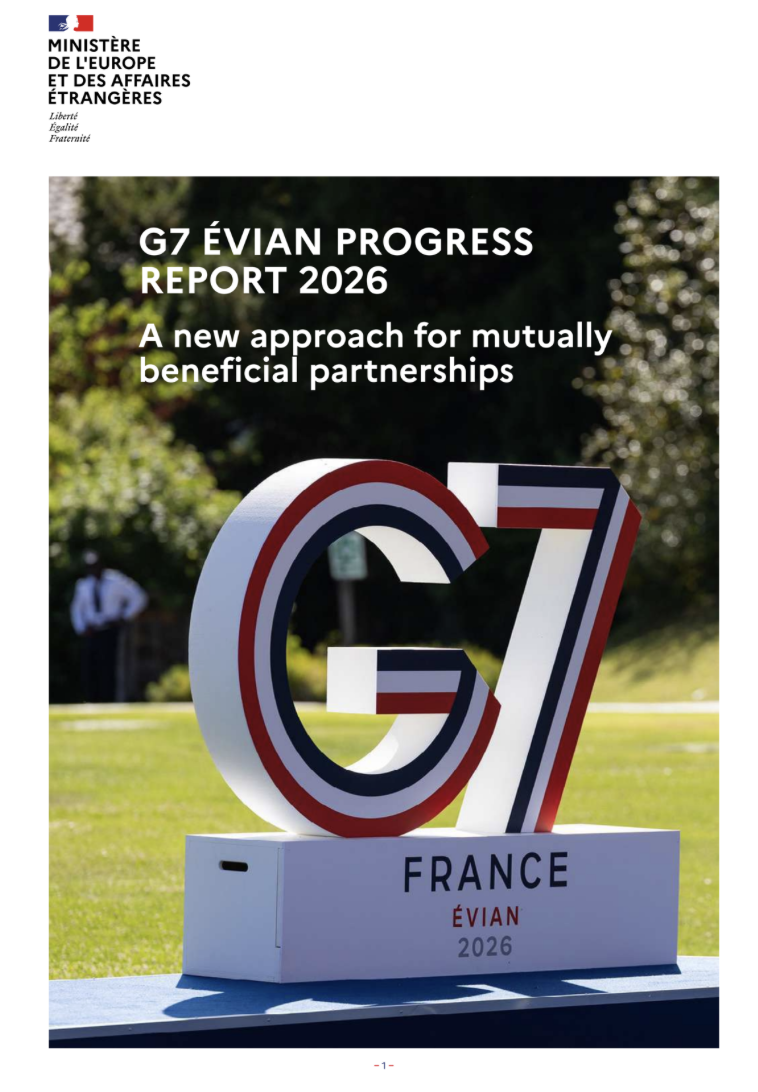
The release of the G7 Évian Progress Report 2026 marks a pivotal evolution in global development cooperation. Moving away from traditional donor-recipient dynamics, the international community is embracing a model centered on mutually beneficial partnerships, national sovereignty, and economic resilience.
With an annual global financing gap estimated at up to USD 6.4 trillion by 2030, Official Development Assistance (ODA) alone cannot meet growing infrastructure, climate, and human development needs. The 2026 report demonstrates how public finance is increasingly being used as a strategic catalyst to mobilize private capital and support sustainable local growth.
Key Takeaways from the Évian Progress Report 2026
- Catalyzing Private Capital & Sustainable Infrastructure
- USD 20.83 Billion Mobilized: In 2024, G7 development projects successfully leveraged over USD 20 billion in private finance to complement public funding.
- Focus on Green Infrastructure: Nearly half (47%) of G7 infrastructure investments in Africa were dedicated to green, climate-resilient infrastructure.
- Critical Minerals & Governance: To support clean energy transitions while avoiding purely extractive models, the G7 and EU provided 71% of funding for the World Bank’s Extractives Global Programmatic Support (EGPS).
- Directing Resources to the Most Vulnerable
- Targeting LDCs and Fragile States: Strategic focus remains on Least Developed Countries and conflict-affected regions, with 34% of G7 ODA directed to conflict-affected areas in 2024.
- Food Security & Agri-Food Systems: G7 disbursements totaled USD 6.7 billion for agri-food systems and USD 4.9 billion for emergency food assistance in 2024, with over 90% of agricultural ODA delivered as grants to protect LDCs from debt burdens.
- Disaster Risk Reduction & Early Warning: The number of countries implementing Multi-Hazard Early Warning Systems (MHEWS) has risen by 113% since 2015, supported heavily by initiatives like Climate Risk and Early Warning Systems (CREWS).
Alignment with WHIS and the World Health Service (DAF)
The Évian report’s strategic shift mirrors the foundational principles of the **World Health Innovation Summit (WHIS)**and the World Health Service Delivery & Alignment Framework (DAF):
- Holistic Health & Determinants: True health sovereignty depends on sustainable agriculture, clean energy, resilient infrastructure, and economic security.
- Community-Led Resilience: Programs like Kenya’s Financing Locally-Led Climate Action (FLLOCA) exemplify the WHIS commitment to empowering local communities to drive climate and health solutions.
- Blended Capital for Social Impact: Combining public, private, and philanthropic capital creates sustainable ecosystems for health and economic well-being.
Looking Ahead: WHIS Venice 2027
As we bridge the outcomes of the G7 Évian Summit with future action, the countdown begins for WHIS Venice 2027.
Building on the momentum of mutually beneficial international partnerships, WHIS Venice 2027 will gather global leaders, innovators, financial institutions, and community advocates to translate economic and development frameworks into tangible health, social, and environmental outcomes. Together, we will continue shaping co-created solutions that ensure no community is left behind.
Older story → Welcoming Farida El Hefni as WHIS Global Ambassador